



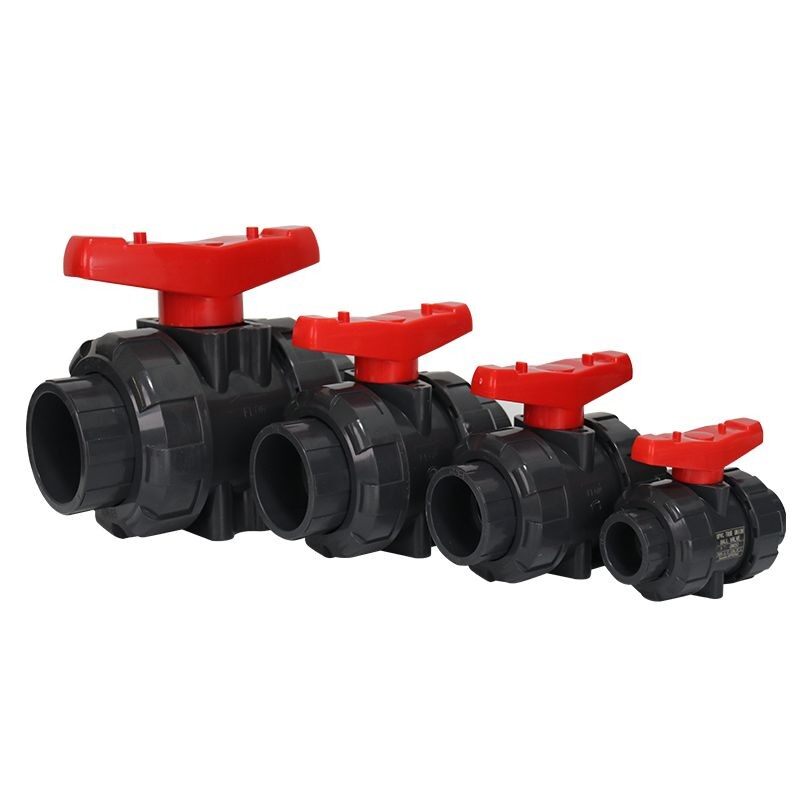
Product Introduction
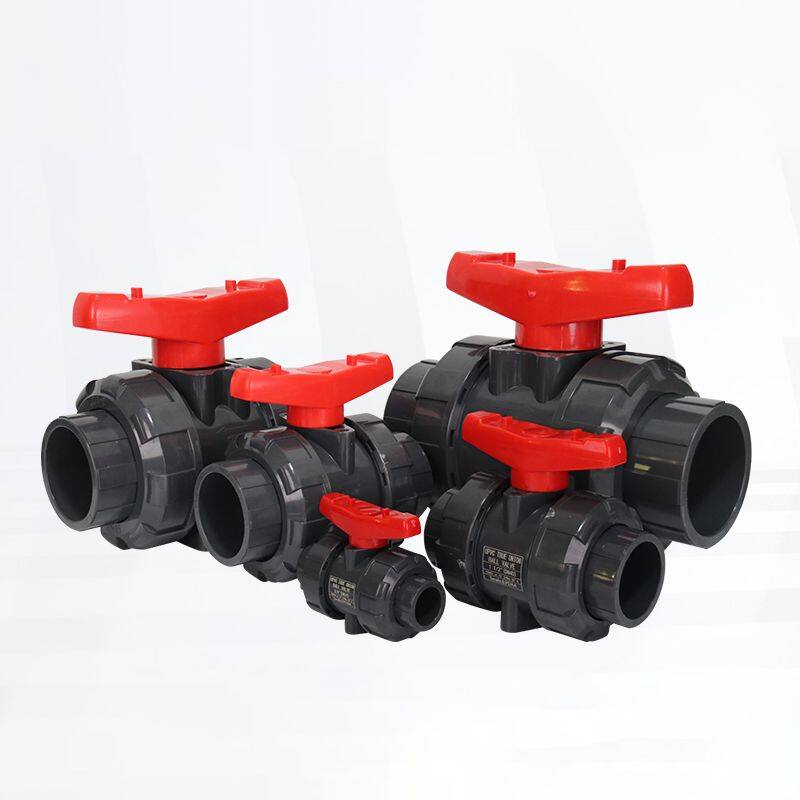
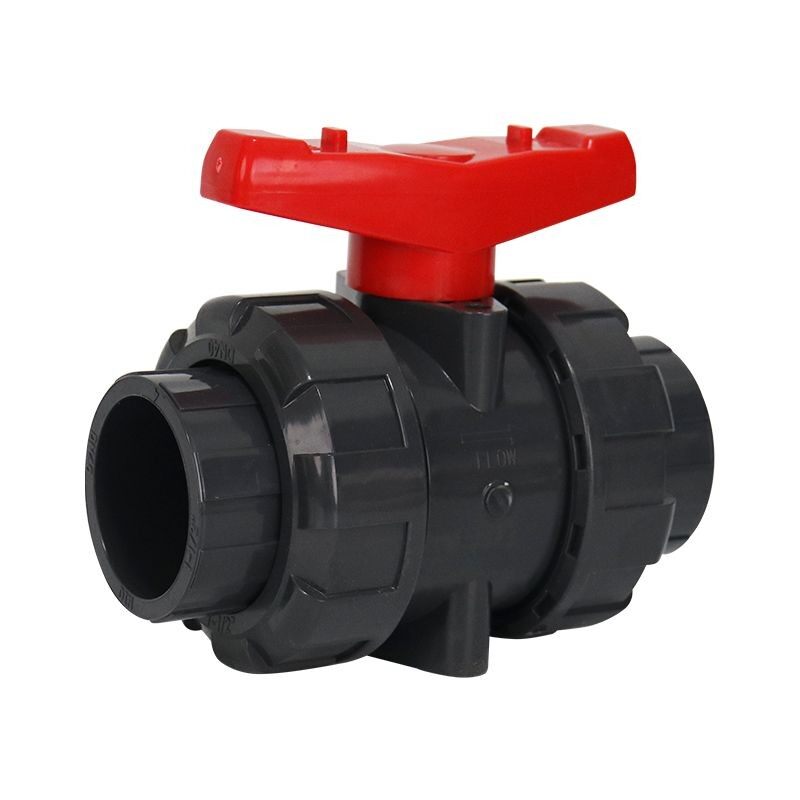
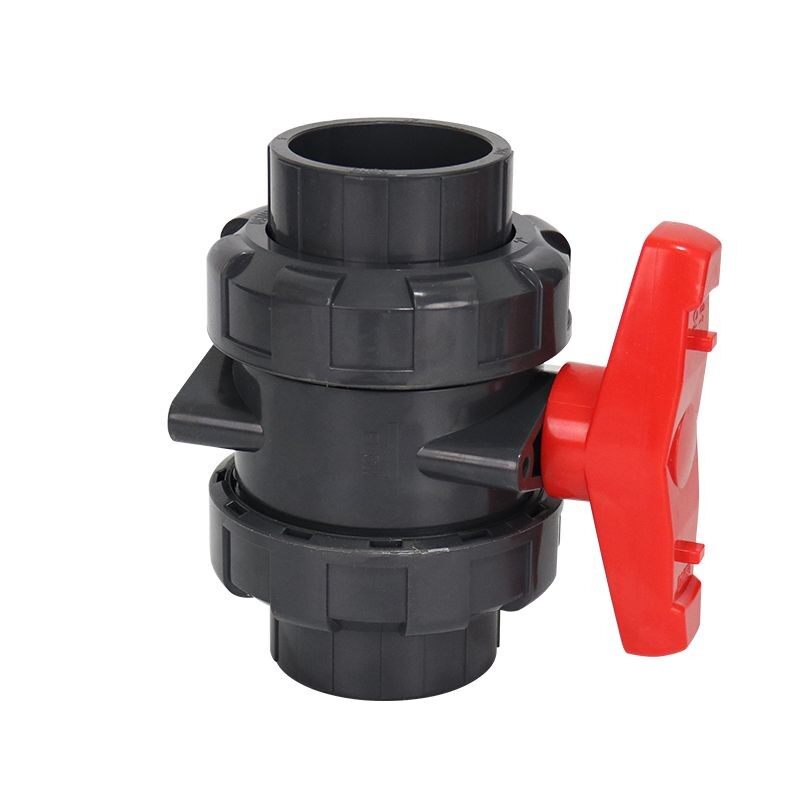
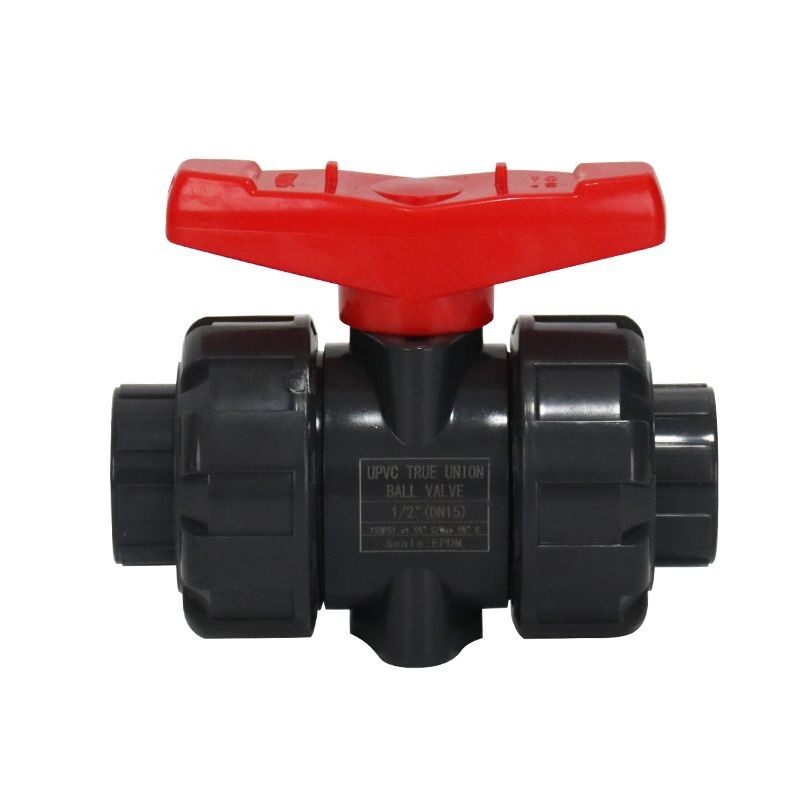
The PVC industrial union ball valve is a fluid control valve made primarily of polyvinyl chloride (PVC). It opens and closes fluids through the rotation of a hollow sphere. The valve body features removable unions at both ends, allowing direct connection to PVC or other pipes. It is widely used in liquid transport systems such as chemical processing, water treatment, and irrigation.
Product Features
Strong Sealing
The PVC industrial union ball valve utilizes imported EPDM sealing rings, which offer excellent elasticity, wear resistance, and aging resistance. The sealing surface is CNC-machined to ensure a tight fit between the ring and the ball, maintaining zero leakage at pressures between 0.6 and 1.6 MPa.
Strong Corrosion Resistance
The valve body and internal components are constructed of high-purity PVC with chemical corrosion inhibitors. The resulting molecular structure is stable and resistant to damage by acids, alkalis, and salt spray. It can operate in media with a pH range of 2-11 without significant corrosion.
Easy to Operate
This ball valve features a large T-handle design with a width of approximately 110–150 mm, allowing the operator to apply greater torque when rotating, making it easy to open and close the valve even under pipeline pressures of 0.8–1.6 MPa.
Application Scenarios
Chemical Transportation
PVC industrial union ball valves are used in chemical production pipelines to control the flow direction and flow of acid, alkali, and other chemical media.
Water Treatment Systems
The ball valves are used in water treatment equipment to regulate or shut off the flow of clean water, wastewater, and circulating water.
Agricultural Irrigation
The ball valves are used to distribute and control the flow of irrigation water in agricultural irrigation networks.
Environmental Engineering
The ball valves are used in environmental protection facilities to manage the transportation of wastewater, waste liquids, and neutralizing solutions.
Industrial Cooling
PVC industrial union ball valves are used to control the circulation and switching of coolant in industrial cooling systems.
FAQ
Q: What is the typical production cycle?
A: Standard models are shipped within 7–10 business days after order confirmation and payment. Custom specifications are subject to design and mold assembly, and the typical turnaround time is 15–20 business days.
Q: Can you customize the color or port size to your specifications?
A: We can customize. We can produce according to the color standard, port size, or pressure rating specified by the customer. We also provide a sample confirmation process to ensure the product meets actual installation requirements.
Q: What are the payment methods?
A: We accept T/T wire transfer, letter of credit (L/C), and escrow payment via some platforms. For bulk orders, payment can be made in installments to reduce customer financial pressure.
Q: What is the nominal pressure of the valve?
A: The nominal pressure of conventional models is PN10 (1.0 MPa), which meets the pressure requirements of liquid transportation in daily industrial pipelines.
Q: What media types are suitable for this valve?
A: It can be used for clean water, weak acid and alkali solutions, salt water, and some chemical media. It is not suitable for highly concentrated strong acids and alkalis or high-temperature liquids.


